Features of the spatial organization of the tourist destination “Capitals of Don Cossacks”
Abstract: The article is devoted to the study of the spatial organization of touristic destination «Capital of the Don Cossacks» in the borders of the Lower Don. On the basis of an interdisciplinary approach, including methods of spatial analysis, historical-genetic, urban planning and strategic research, the boundaries of the district that unites the city of Novocherkassk, Starocherkasskaya and Razdorskya have been defined. Analysis of tourism and recreation potential, transport infrastructure and historical-cultural resources. Spatial development imbalances between clusters of the federal scheme «Eastern South of Russia» were identified and a model of integrated destination, oriented towards route connectivity, preservation of landscape identity and development of local communities was proposed. The principles of forming a single spatial framework, including a panoramic route along the high bank of the Don, have been developed, as well as recommendations for inclusion of destiation in regional urban development and infrastructural development programs.
Keywords: tourist destination, spatial organization, urban development, Nizhny Don, cultural landscape
INTRODUCTION
The development of domestic tourism in Russia has shown a steady upward trend in recent years, driven both by internal factors (state policy aimed at stimulating domestic tourism, infrastructure development, promotion of regional brands) and external circumstances (restrictions on international travel, geopolitical situation, sanctions policies). According to the Federal Agency for Tourism (Rosturizm), between 2019 and 2023, the domestic tourist flow in the country increased by more than 20%, reaching 78 million trips in 2023, while the volume of inbound tourism amounted to about 15 million trips, also indicating the industry’s recovery after the pandemic decline1.
Rostov Oblast occupies a prominent place among the territories attractive for domestic tourism in Russia. According to Rostovstat data, in 2022 the region was visited by about 1.6 million tourists, which is 12% higher than the pre-pandemic level2. The main purposes of travel remain cultural and educational tourism (historical settlements of the region), gastronomic tourism (Don cuisine and wineries), as well as participation in cultural and event-based activities (festivals, reenactments, Cossack holidays). An important factor is the recreational potential: about 250 km of coastal areas along the Don River, the Sea of Azov and the Tsimlyansk Reservoir, as well as other water bodies, are used for recreation and water tourism, while the network of protected natural areas generates interest in ecological and landscape tourism3.
In 2021–2024, active implementation of domestic tourism support measures was observed4. According to the regional program “Development of Culture and Tourism”, the volume of domestic tourism in Rostov Oblast grew by more than 15% over the past four years, with a noted shift in interest towards lesser‑known territories5.
In recent years, tourism development in Russia has acquired the status of one of the priority areas of state policy. The Strategy6 defines the need to form tourism clusters and destinations synchronised with the socio‑economic development programmes of the federal subjects. The practical implementation of the strategy’s goals is ensured through the federal state programme “Tourism Development”7.
At the regional level, an updated “Socio‑Economic Development Strategy of Rostov Oblast until 2030”8 and the state programme of Rostov Oblast “Development of Culture and Tourism”9 have been adopted. The Socio‑Economic Development Strategy of Rostov Oblast sets the task of developing tourism clusters in the Azov‑Don basin area and near the historical centres of the Cossacks, which is directly related to the territory under study. In the socio‑economic development strategies of Aksaysky, Bagaevsky, Oktyabrsky, Semikarakorsky and Ust‑Donetsky municipal districts, as well as the city of Novocherkassk, tourism is included among the priority areas.
Interest in domestic tourism opens up prospects for the development of tourist clusters in the territory of Rostov Oblast. Today, we should assess the capacity of the existing settlement systems based on historical settlements to accommodate tourist flows. Despite the available tourism resources, the settlement system itself requires significant investments and, consequently, a revision of design approaches to the development of urban planning documentation.
Research Boundaries
As a result of the analysis of the interregional territorial‑spatial planning scheme “Eastern South of Russia”, it was revealed that according to the scheme10, six tourist clusters are identified in the territory of Rostov Oblast. The formation and mapping of such clusters in regional policy is considered a key tool for spatial development [1]. Two of them are located in the zone of maximum concentration of tourist attractors11 within the boundaries of Rostov Oblast. These are:
- Cluster No. 1: “Rostov‑on‑Don – Starocherkasskaya – Novocherkassk” covering about 803 km²;
- Cluster No. 4: “Semikarakorsk – Pukhlyakovsky – Starozolotovsky” covering about 525 km².
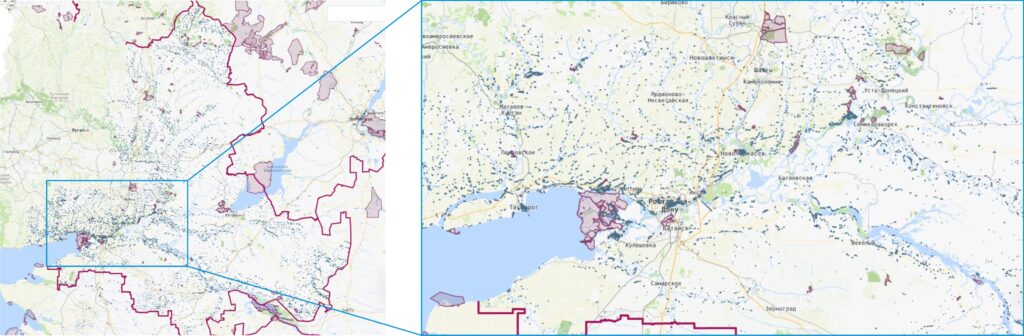
Fig. 1. Clusters of attractors in the territory of Rostov Oblast. Compiled by Daniel S. Alekseev
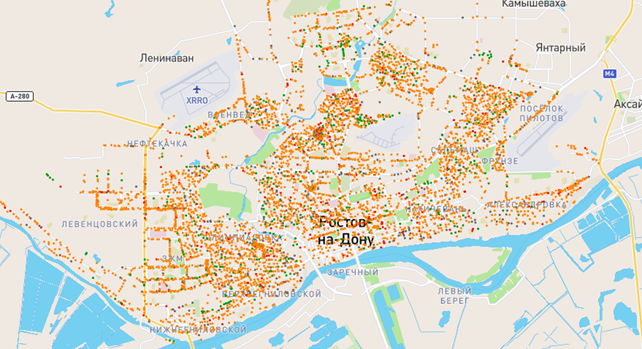
When analysing data from the NSDI service, it was found that the highest concentration of attractors12 is located in the Lower Don area (Fig. 1). The methodology for recording and interpreting concentrations of tourist attractors when delineating destination boundaries is described in contemporary research on the clustering of tourist resources [2]. In the area of highest concentration of tourist interest objects, it is necessary to apply the historical‑genetic method, which allows extracting from the multitude of point attractors the cultural‑historical resource of greatest interest for cultural and educational tourism13.
The identity of the Lower Don territory, which generates contemporary cultural and educational interest, is associated with the historical residence of the Don Cossacks there. The distinctive culture has been preserved not only in folk traditions but also in many historical landmarks, architectural objects, as well as in the urban planning features of settlements and the settlement system [3, pp. 314–315].
In the Lower Don floodplain, the historical capitals of the Don Cossacks / the Don Host were formed – Razdorsky Gorodok, Cherkassky Gorodok, and on the right‑bank above‑floodplain elevation the city of Novocherkassk. This is a territory where many unique architectural monuments related to the history of the Don Cossacks – cultural heritage sites – have been preserved.
The status of the capital of the Don Cossack army in different historical periods belonged to different settlements – gorodoks, stanitsas and cities: Razdorsky Gorodok (Razdory) on an island near Razdorskaya stanitsa (1571–1622), Monastyrsky Yar (1622–1637), the city of Azov (1637–1642), again Razdorsky Gorodok (1642–1644), Cherkassk Gorodok on the Don, now Starocherkasskaya stanitsa (1644–1805), the city of Novo‑Cherkassk, now Novocherkassk (1805–1920, and since 1993). All of them were founded by the Don Cossacks, except for Azov, which was founded by the Turkish Ottoman Empire, which built the Azak fortress in 1475.
The territory between Novocherkassk, Starocherkasskaya and Razdorskaya forms a special space of historical, cultural and tourist interest, which within the framework of this study is considered a potential tourist destination14 (Fig. 2). Its area is about 3125 km², making it comparable in size to individual tourist districts at the level of European regions, for example the island of Mallorca (3640 km²), the Lake District National Park in the United Kingdom (2362 km²) or the province of Groningen in the Netherlands (2956 km²).
Thus, the research boundaries are justified by:
- the provisions of the interregional territorial‑spatial planning scheme “Eastern South of Russia” (boundaries of tourist clusters);
- the highest concentration of tourist attractors (cultural‑historical and natural potential of the territory) in Rostov Oblast;
- the tasks of creating a comfortable and safe environment in the settlements of municipalities bordering the tourist clusters.
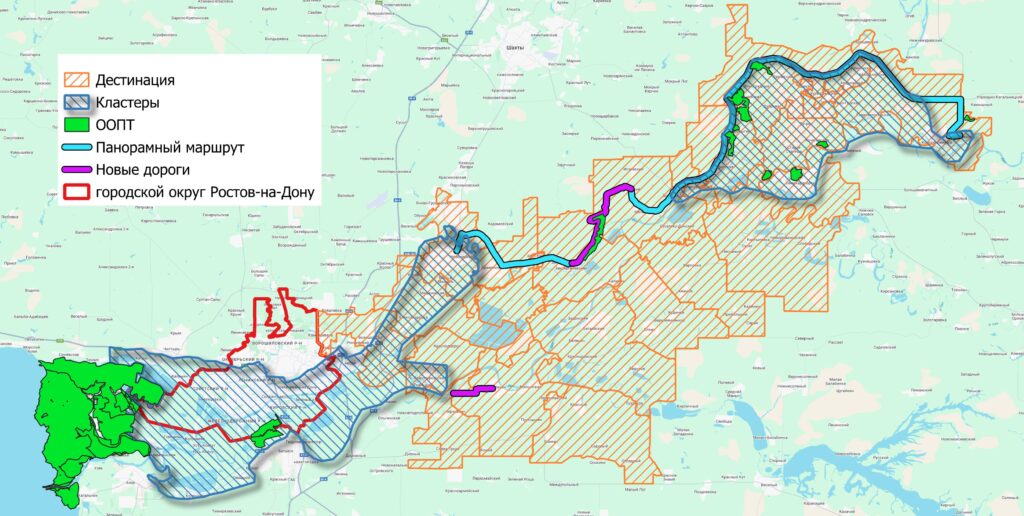
Fig. 2. Map of the Lower Don territory. Compiled by D.S. Alekseev
The boundaries of the tourist clusters defined in the territorial‑spatial planning scheme “Eastern South of Russia” do not include territories containing important attractors15, namely the protected area “Zolotye Gorki”, the long high bank of the Don (28 km), 21 beaches, 3 wineries and 30 hectares of vineyards, which are included within the boundaries of this study.
This circumstance is significant within the framework of the research. The federal scheme is oriented towards the development of nodal centres of tourist activity and the formation of “magnets” for tourist flows, but at the same time it underestimates peripheral territories, which are important for the development of local communities. According to contemporary understandings of a tourist destination, its integrity is determined not only by the presence of central points of attraction but also by the involvement of peripheral spaces [4]. The involvement of adjacent territories is important for maintaining the viability of tourist clusters; such territories make it possible to form continuous routes, create comfortable and safe conditions for tourists, and ensure the participation of local communities in the tourism industry.
The analysis of the scheme revealed a spatial imbalance: the main tourist flow is concentrated in Rostov‑on‑Don, Taganrog and Azov, while the territories between Novocherkassk, Starocherkasskaya and Razdorskaya remain poorly developed. For example, the total tourist flow for cluster No. 1 of the federal scheme (“Rostov‑on‑Don – Starocherkasskaya – Novocherkassk”) in 2023 amounted to about 2.6 million people, while for cluster No. 4 (“Semikarakorsk – Pukhlyakovsky – Starozolotovsky”) it was only 47.1 thousand people. Thus, tourist flow indicators differ by a factor of 50 between cluster No. 1 and cluster No. 416; this indicates a high unevenness in the spatial distribution of tourism, which is generally characteristic of the entire settlement system of Rostov Oblast [5].
At the same time, the forecast until 2030 indicates further growth: in cluster No. 1, the tourist flow is expected to increase to 2.78 million people, and in cluster No. 4 – to 61.8 thousand people. It is important to emphasise that it is precisely cluster No. 4 that spatially coincides with the zone of the historical capitals of the Don Cossacks and possesses significant growth potential, provided that tourist objects are integrated and infrastructure is developed.
Cluster No. 4 (Razdorskaya stanitsa, Starocherkasskaya stanitsa and Novocherkassk) is characterised by a lower density of tourist attractors and limited infrastructure compared to Cluster No. 1 (299 protected areas and cultural heritage sites, excluding barrows and burial grounds over 3125 km², or about 0.1 attractors per km², compared to the urban district of Rostov‑on‑Don, which partially belongs to cluster No. 1: 446 objects over 348 km², or about 1.3 attractors per km²).
The presence of a relatively large number of attractors, the high dynamics of domestic tourism and growing state support create prerequisites for development. However, the high sparsity of tourism resources and serious infrastructure problems, especially in the field of road infrastructure, which is one of the main constraining factors in many regions of Russia [6, p. 42], do not allow the territory to fully realise its potential. It is assumed that an integrated approach to forming a holistic tourist destination can help increase the urban planning potential of the territory. For this purpose, a spatial model under the conditions of Rostov Oblast is proposed, based on the identification of the following territorial levels [4].
- Tourist macroregion – a set of several regions within which a major tourist destination is located. In our study, the macroregion is defined by the federal tourist interregional territorial‑spatial planning scheme “Eastern South of Russia” (ProGorod LLC, 2024) and includes the territory of Rostov Oblast, Krasnodar Krai and the Republic of Adygea.
- Tourist region – a federal subject in which there are relevant regional authorities managing tourism issues, i.e., Rostov Oblast.
- Tourist destination “Capitals of the Don Cossacks”, defined within the framework of this study, covers one urban district – Novocherkassk, as well as three urban settlements – Semikarakorsk, Konstantinovsk, Ust‑Donetsk and 18 rural settlements from 5 municipal districts (Aksaysky (4 out of 11), Bagaevsky (5 out of 5), Oktyabrsky (2 out of 7), Semikarakorsky (3 out of 10) and Ust‑Donetsky (5 out of 8)); such destinations may include one or more tourist clusters.
- Tourist clusters, also defined by the territorial‑spatial planning scheme “Eastern South of Russia”, cover territories within the boundaries of several settlements. The scheme identifies 6 clusters in the territory of Rostov Oblast.
- The territorial level considered in the study is the tourist destination. Within the boundaries of the studied destination, two tourist clusters intersect – cluster No. 1 (Rostov‑on‑Don, Starocherkasskaya, Novocherkassk) and cluster No. 4 (Semikarakorsk, Pukhlyakovsky, Starozolotovsky).
This study uses the definition of the concept of tourist destination proposed by Gorokhov [4], who notes that the secondary resources of a destination include infrastructure and superstructure. The latter refers exclusively to tourist objects, mostly used by tourists, such as hotels, beaches, etc. Infrastructure, according to his definition, includes roads and other public utilities used by the local population alongside tourists, and, according to Ivashkin and Kuznetsov [8, p. 126], active use of this infrastructure can lead to its depletion and degradation, as well as to competition between locals and tourists for its use. In this context, attention to infrastructure development in the destination territory, taking into account tourist flows, can reduce the likelihood of conflicts and contribute to the development of local communities.
The boundaries of the destination being formed include two clusters and adjacent territories, where special attention is paid to spatial connectivity and route integration. In the “Eastern South of Russia” scheme, the emphasis is on Novocherkassk and Starocherkasskaya stanitsa as key objects of cultural tourism. Within the emerging tourist destination, the following play a significant role: natural components (coastal landscapes of the Don), cultural and event venues of small stanitsas, routes lasting up to ten days and, most importantly, the interests of local communities.
As a result, the tourist destination uniting the historical capitals of the Don Cossacks should be considered not as two separate clusters, but as a single territory, where not only the quantitative increase in tourist flow is important, but also the formation of a brand that unites heterogeneous objects and practices into a single system. An approach that views a destination as an integrated socio‑economic system of interconnected components is supported by contemporary scientific literature on tourist‑recreational clusters [2].
The purpose of the article is to identify the urban planning features of forming a holistic tourist destination in the space of the historical capitals of the Don Cossacks to increase the urban planning potential of the territory.
The research relies on an integrated approach combining methods of urban planning analysis, spatial modelling, historical‑cultural research and analysis of strategic planning documents. Let us consider each method separately:
Spatial analysis was implemented using geographic information technologies. Based on open geodata (Yandex.Maps, 2GIS, votetovid.ru, TessaDEM) and official spatial datasets (NSDI), an inventory of tourist‑recreational resources, transport and engineering infrastructure facilities, natural complexes and protected areas was conducted. Methods of comprehensive inventory and spatial analysis are applicable in contemporary works on the assessment of tourism potential and industry development forecasts [9]. Spatial referencing allowed identifying “voids” in the tourist network, as well as promising zones for route development and infrastructure nodes.
The historical‑genetic method was used to understand the evolution of the planning structure and define the boundaries of the destination, which made it possible to reconstruct the processes of settlement formation and identify stable patterns of their development. Connections with the natural‑landscape complex and the historical settlement of the Don Cossacks were identified. This research showed that modern tourism centres on the Don were formed on the basis of traditional riverside settlement systems [6], which is important when designing modern routes.
Analysis of urban planning documentation, including the study of functional zones, restrictions and development prospects based on materials from the Federal State Information System for Territorial Planning (FSIS TP). This made it possible to identify contradictions between the actual location of tourist objects and the urban planning documentation that determines land use regimes, location of local facilities, etc.
The analysis of strategic planning documents and project management was carried out based on an analysis of federal17 and regional18 documents, resulting in proposals for synchronising local urban planning solutions with interregional programmes. This approach allows us to consider the destination as an element of the larger tourism system of Southern Russia, embedded in national development priorities.
The application of research methods has made it possible to form a holistic picture of the potential and constraints of the studied territory, which provides an opportunity to formulate proposals for creating a tourist destination.
Spatial Effects of Destination Formation
The creation of a tourist destination is aimed at forming a developed service system and landscaping the territory, creating new jobs, developing engineering infrastructure, improving safety and environmental quality, as well as preserving cultural heritage and landscape attractiveness. An analysis of successful practices for increasing tourist attractiveness through clustering confirms the role of inter‑municipal cooperation and the unification of infrastructure development standards [10].
To ensure further spatial development, key principles for the formation of the destination are proposed: creating new attractors, developing a service system for tourists and local communities, increasing connectivity between settlements, preserving landscape attractiveness and forming an identical image, strengthening the resilience and engineering provision of the territory. The implementation of an integrated approach involves densifying the network of transport links oriented towards viewpoints and cultural landscapes, which ensures the visual and functional integrity of the destination and forms the basis for its sustainable development.
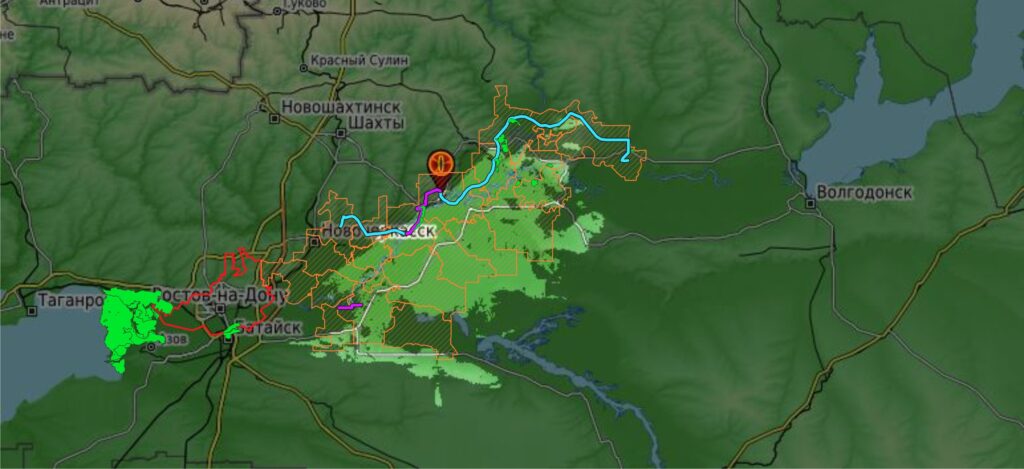
Fig. 3. Viewing capabilities of the panoramic route (votetovid.ru). Compiled by Daniel S. Alekseev
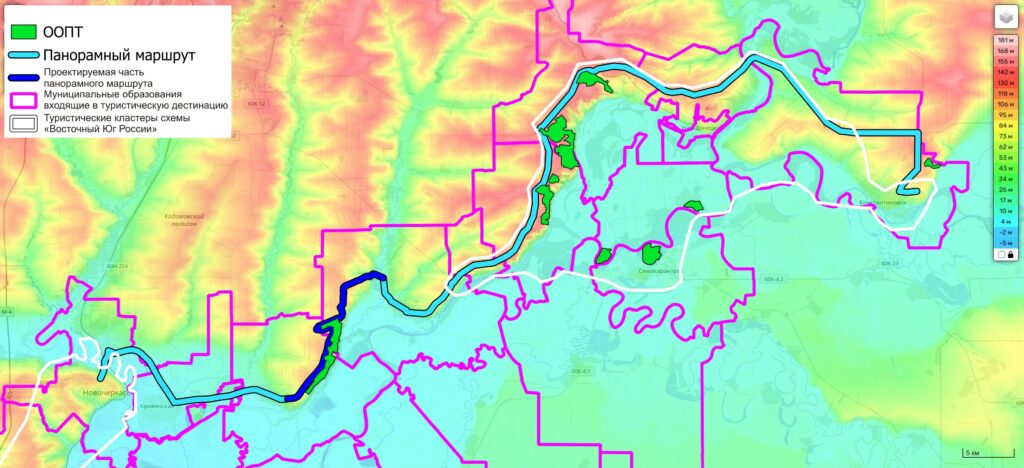
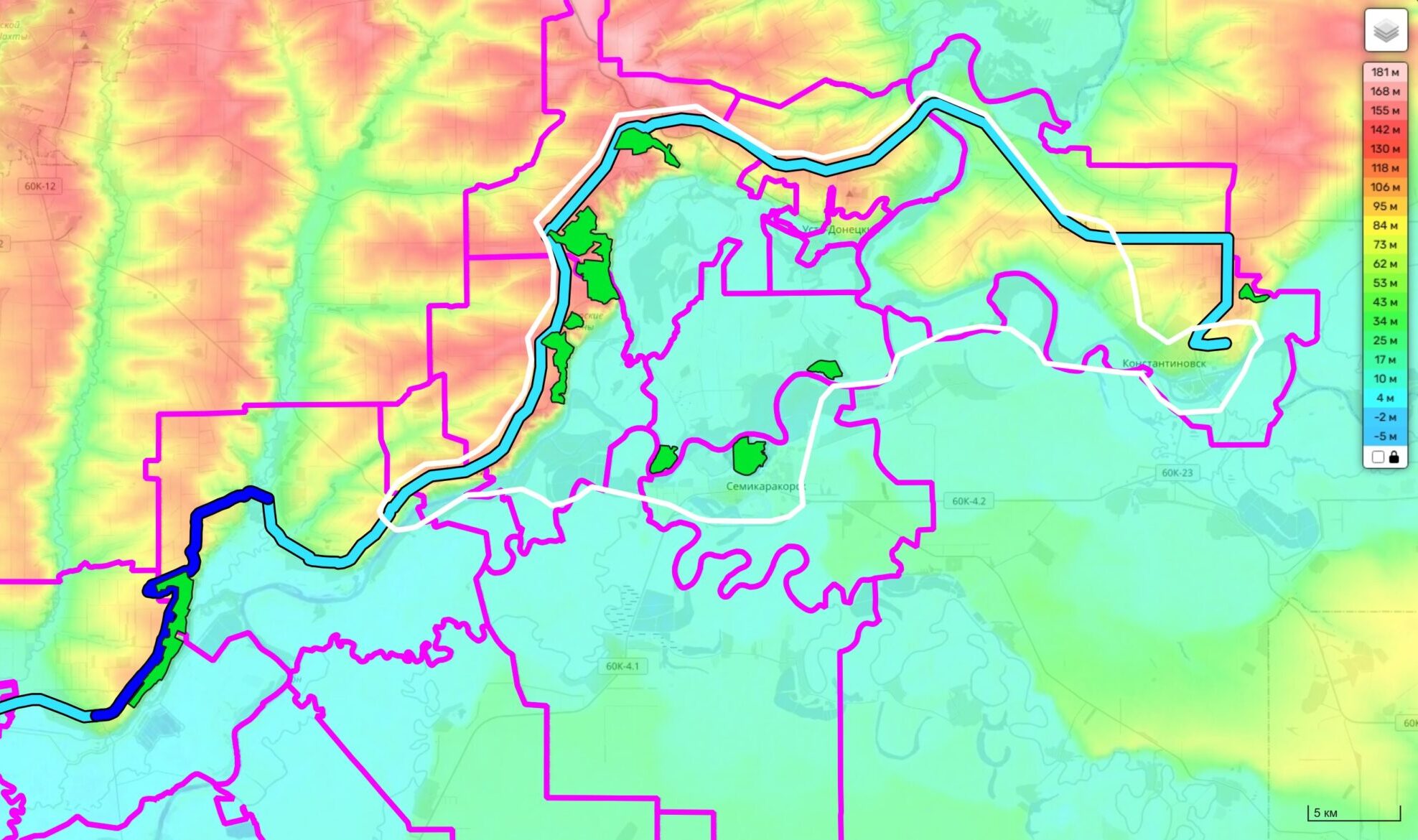
Fig. 4. Topographic map of the panoramic route. Compiled by Daniel S. Alekseev
One of the key resources for forming a holistic tourist destination in the space of the historical capitals of the Don Cossacks is its landscape‑view potential. Unlike large urbanised centres (Rostov‑on‑Don), this territory has a relief that can become the basis for creating extended tourist routes and sites with unique viewing characteristics, which partly compensates for the problems of lower attractor density.
The main spatial axis of the territory under consideration is the northern high bank of the Don, stretching 100 km from the outskirts of Novocherkassk to Konstantinovsk. A road runs along the edge of the above‑floodplain terrace, connecting most of the destination’s attractors. The formation of a route based on this, connecting fragments of roads, has aesthetic value due to its panoramic characteristic: over most of its length, visibility range reaches 50 km (Fig. 3), which creates a rare opportunity for a flat territory in Russia – a concentration of viewpoints. The visual diversity of the coastal relief is enhanced by the presence of ravines, floodplain meadows and vineyards, forming “picturesque corridors” that can become part of the tourist‑recreational infrastructure.
Two specially protected natural areas are located along the projected route: “Zolotye Gorki” near Novocherkassk and “Razdorskie Slony” near Razdorskaya stanitsa. They represent a significant resource for ecological and educational tourism, and their integration into tourist programmes will make it possible to combine the cultural and natural components of the destination. Similar examples of combining natural landscapes with historical‑cultural heritage demonstrate high effectiveness in international practice (for example, in the development of wine tourism routes in Tuscany or cultural trails in Austria).
The proposed route along the high bank of the Don can perform several functions simultaneously. Firstly, it solves the problem of route connectivity: it unites discrete points of attraction (Novocherkassk, Starocherkasskaya, Razdorskaya) into a single system, which also significantly improves the quality of the environment for local residents. Secondly, it ensures the territorial integration of natural and cultural objects, which makes it possible to increase the length of tourist stays. Thirdly, the route can become the basis for branding the destination, for example in the format of a “road of Cossack capitals”, “path of atamans” or “panoramic route along the Don”.
The landscape‑view characteristics of the studied territory also create opportunities for event tourism. Coastal sites with wide views can be used as spaces for festivals, reenactments and cultural events, which will extend the seasonality of tourism and reduce dependence on the traditional summer season. In addition, the edge of the above‑floodplain terrace can serve as a location for campsites for tent tourism and astrotourism due to the combination of viewing opportunities during the day and the absence of light pollution from cities at night.
The key solution compensating for the lower density of point attractors is the formation of an extended panoramic route along the high bank of the Don. Its creation will allow integrating disparate cultural, natural and event resources into a holistic system, thereby providing the destination with competitive advantages in the tourism market of Southern Russia.
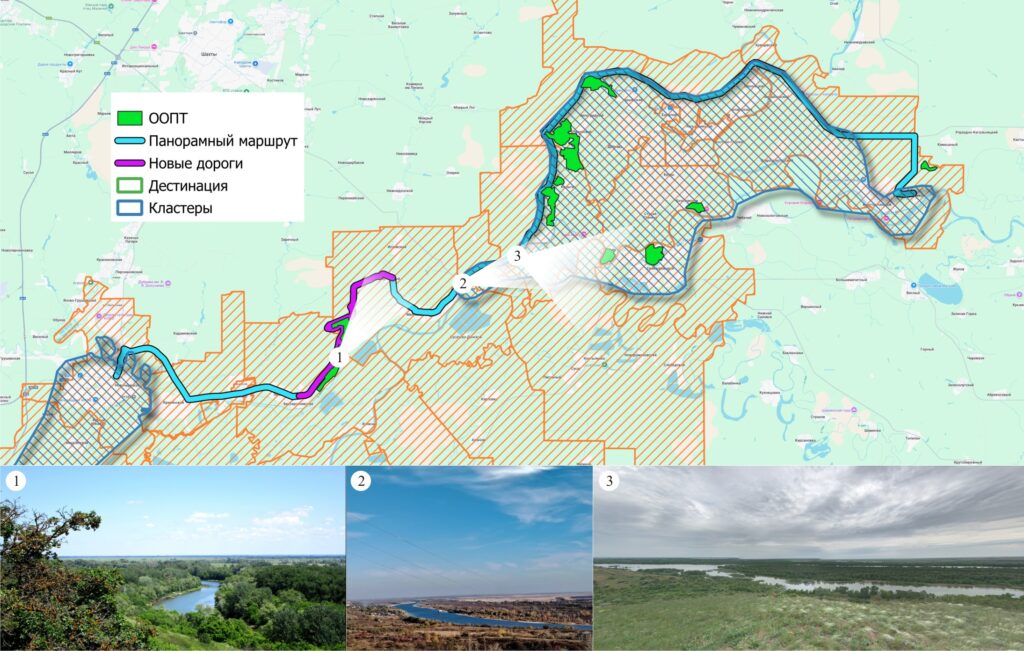
Fig. 5. Panoramic route of the high bank. Compiled by Daniel S. Alekseev
However, the implementation of this project faces infrastructure constraints. The most problematic section, on which the integrity of the future route depends, is the absence of a direct paved road between ZAPLAVSKAYA and MELIKHOVSKAYA stanitsas (Fig. 5). The length of this section is 21 km, and its construction would reduce the existing detour by 30 km. The reconstruction of this road will become the final link, thanks to which the total length of the panoramic route will exceed 100 km. Thus, the development of inter‑settlement connections along the high bank of the Don, including the reconstruction of the road network and the creation of equipped stopping points, is a key element in the formation of the destination’s tourist framework.
Collective accommodation infrastructure is also characterised by imbalance. According to the federal scheme, the room stock in cluster No. 1 exceeds 12,000 places, while in cluster No. 4, which spatially coincides with the destination, there are only 571 rooms, mainly in the CSR (collective accommodation sector). At the same time, there are no accommodation facilities in the 4–5* category, which limits the possibilities of attracting the solvent segment of tourists. By 2030, the room stock is forecast to increase to 602 rooms, but this is insufficient to ensure the growth of tourist flows and improve the quality of service.
Since September 1, 2025, a federal experiment has been launched in which Rostov Oblast participates19 to regulate the activities of guest houses, which will bring out of the grey zone enterprises providing temporary accommodation for tourists. In this regard, despite the downward statistics on population within the destination, measures are needed to develop the housing stock, which, in the context of the experiment, can create a new resource for accommodating tourists, which, in turn, will contribute to the development of residential zones and, consequently, to the growth of urban planning potential.
Thus, the emergence of guest houses, which, on the one hand, as suburban real estate of local residents, contribute to the ruralisation of agglomerations and the seasonal outflow of residents from the Rostov‑on‑Don agglomeration, and on the other hand, as housing stock for tourists. Guest houses are a superstructure (according to Gorokhov’s definition [4]) that can compensate for the missing tourist accommodation stock in the destination with three‑, four‑ and even five‑star facilities. Such country residences can be considered as micro‑investments in the tourist superstructure that do not require additional administrative actions. The category of micro‑investments also includes the identification of zones for glamping sites along the panoramic route, which can become new centres of spatial development of the territory and new attractors.
Infrastructure development of the destination should be considered as a comprehensive task, including: provision of sanitary zones, organisation of parking spaces, improvement of transport links, increase in room stock, creation of service and engineering infrastructures, mechanisms for creating new residential zones for guest houses and glamping territories on the panoramic route. The integration of these areas with the federal programmes of the Ministry of Construction and regional strategies will make it possible to transform the territory of the historical capitals of the Don Cossacks into a competitive tourism product and significantly improve the quality of life of local communities.
The study revealed that the formation of a holistic tourist destination in the space of the historical capitals of the Don Cossacks requires not only the development of infrastructure and routes, but also the construction of an effective management and promotion system for the territory. An analysis of the federal tourist interregional scheme “Eastern South of Russia” showed that the inclusion of individual objects in clusters No. 1 and No. 4 does not provide the necessary coordination between municipalities and does not take into account the socio‑cultural characteristics of the territory.
The most important component in the formation of a unified brand of the territory is its architectural‑urban planning appearance (AUPA). In addition, since the main settlements of the destination are concentrated on the banks of the Don, it is necessary to identify river facade zones with the requirement to observe a certain AUPA specific to the territory, which, in turn, should correspond to local traditions. It can form different identities of settlements that will combine with each other, representing the unity of different identities within a single destination.
Synchronisation of territorial planning documents is necessary. The inclusion of the destination as a separate object in regional and municipal strategies will allow its specificity to be taken into account when allocating budgetary and infrastructure resources. This will ensure that local solutions comply with federal priorities and simplify access to state support mechanisms.
Conclusion
The conducted study substantiates the possibility of forming a tourist destination in the space of the historical capitals of the Don Cossacks as one of the priority directions for sustainable territorial development of Southern Russia. Based on an analysis of spatial connections, concentration of attractors and historical‑cultural potential, principles have been identified that ensure the transition from fragmented tourist clusters to a single destination based on the integration of cultural heritage, transport and engineering infrastructure, as well as territorial branding. The results confirm that the effectiveness of the development of tourist destinations depends on the coordination of strategic and urban planning decisions between municipalities, as well as on the introduction of instruments for inter‑municipal interaction and monitoring of spatial processes. The creation of a unified tourist space contributes not only to the economic growth of the region, but also to the preservation of cultural identity, the formation of a positive image and the strengthening of the social cohesion of the territory.
As an object of urban planning design under the conditions of Rostov Oblast, the destination needs the following measures to organise the development and synchronisation of documentation that takes into account the new urban planning policy:
- at the regional level, develop a concept for the tourist destination;
- develop socio‑economic development strategies for the municipalities (SED MO) that are part of the tourist destination, taking into account the elements of the inter‑municipal destination concept;
- propose common (seamless) urban planning design standards (UDS) within the boundaries of the tourist destination (taking into account the capacity of tourist flows for the regulatory areas: healthcare, landscaping, transport, engineering provision and safety);
- jointly develop unified territorial planning documents for the settlements included in the destination, based on the SED MO;
- as part of the unified territorial planning document, develop an AUPA taking into account the tourist value of the territories;
- create conditions in territorial planning and zoning documents for the application of the integrated territorial development mechanism (KRT – kompleksnoye razvitiye territoriy);
- within the framework of territorial planning documents of settlements, take into account the development of residential zones suitable for the construction of guest houses and the organisation of glamping sites.
The formation of a tourist destination in the space of the historical capitals of the Don Cossacks implies a transition from the fragmentary development of individual clusters to a systematic approach based on inter‑municipal interaction, a unified brand and synchronisation of territorial planning documents of municipalities and the local regulatory framework. Practical studies of regional clusters show that the adaptability and resilience of cluster models are especially important in conditions of crisis impacts (pandemic, sanctions) and should be taken into account when developing an integration strategy [11]. This will not only increase the tourist attractiveness of the region, but also create a sustainable model of spatial development where tourism becomes a factor in heritage preservation and a source of socio‑economic growth. The creation of such a destination can serve as a “smart spatial solution” [12, p. 309].
The study allowed to:
- form scientifically based boundaries for the tourist destination “Capitals of the Don Cossacks”;
- outline the principles for the formation of the destination;
- propose measures for the organisation of development and synchronisation of urban planning documentation;
- propose a conceptual model of the destination as a sustainable territorial entity combining cultural heritage, natural landscape and modern tourism practices;
- propose spatial solutions for the organisation of a panoramic route.
Notes
- Federal Agency for Tourism (Rosturizm). Statistical Compendium on Domestic and Inbound Tourism in the Russian Federation, 2019–2023. – M.: Rosturizm, 2024. – 124 p. ↩︎
- Territorial Body of the Federal State Statistics Service for Rostov Oblast (Rostovstat). Socio‑Economic Situation of Rostov Oblast in 2022–2023: Statistical Bulletin. – Rostov‑on‑Don: Rostovstat, 2024. – 76 p. ↩︎
- Federal State Statistics Service (Rosstat). Regional Statistics for Rostov Oblast. Tourism and Hotel Industry, 2019–2023. – M.: Rosstat, 2024. – 98 p. ↩︎
- State Programme of the Russian Federation “Tourism Development”: approved by Decree of the Government of the Russian Federation (as amended in 2023) // Collected Legislation of the Russian Federation. – 2023. – No. 14. – Art. 2357. ↩︎
- State Programme of Rostov Oblast “Development of Culture and Tourism” for 2021–2030: approved by Decree of the Government of Rostov Oblast dated December 29, 2020 No. 1121 // Official Internet Portal of Legal Information of Rostov Oblast. – URL: https://www.donland.ru ↩︎
- Tourism Development Strategy of the Russian Federation until 2035: Directive of the Government of the Russian Federation dated September 20, 2019 No. 2129‑r // Collected Legislation of the Russian Federation. – 2019. – No. 39. – Art. 5465 ↩︎
- State Programme of the Russian Federation “Tourism Development”: approved by Decree of the Government of the Russian Federation (as amended in 2023) // Collected Legislation of the Russian Federation. – 2023. – No. 14. – Art. 2357 ↩︎
- Socio‑Economic Development Strategy of Rostov Oblast until 2030: Decree of the Government of Rostov Oblast dated December 12, 2018 No. 781 // ConsultantPlus. – URL: https://www.consultant.ru ↩︎
- State Programme of Rostov Oblast “Development of Culture and Tourism” for 2021–2030: approved by Decree of the Government of Rostov Oblast dated December 29, 2020 No. 1121 // Official Internet Portal of Legal Information of Rostov Oblast. – URL: https://www.donland.ru ↩︎
- Federal Tourist Interregional Territorial‑Spatial Planning Scheme “Eastern South of Russia” / ProGorod LLC (VEB.RF Group). – M.: Ministry of Economic Development of the Russian Federation, 2024. – 215 p. ↩︎
- A tourist attractor is an object that is potentially of tourist interest. ↩︎
- In this case, attractors of tourist interest are understood as objects of specially protected natural areas and territories of cultural heritage sites included in the unified state register of cultural heritage objects (historical and cultural monuments) of the peoples of the Russian Federation, excluding burial grounds, barrows and other zones of exclusively archaeological value. ↩︎
- According to the study of the Federal Tourist Interregional Territorial‑Spatial Planning Scheme “Eastern South of Russia” / ProGorod LLC (VEB.RF Group). – M.: Ministry of Economic Development of the Russian Federation, 2024. (p. 122), cultural‑educational tourism accounts for the largest share among the purposes of visiting Rostov Oblast among the surveyed respondents. ↩︎
- “A comprehensive product that includes a set of natural, cultural, social, economic and infrastructural resources that ensure the accommodation and leisure of a certain category of consumers” [3] ↩︎
- According to the study of the Federal Tourist Interregional Territorial‑Spatial Planning Scheme “Eastern South of Russia” / ProGorod LLC (VEB.RF Group). – M.: Ministry of Economic Development of the Russian Federation, 2024. (p. 138), 17% of tourists arrive in the territory of Rostov Oblast for the purpose of nature‑ecological recreation, and 9% for the purpose of beach recreation. ↩︎
- According to the study of the Federal Tourist Interregional Territorial‑Spatial Planning Scheme “Eastern South of Russia” / ProGorod LLC (VEB.RF Group). – M.: Ministry of Economic Development of the Russian Federation, 2024 (pp. 541, 559) ↩︎
- Tourism Development Strategy of the Russian Federation until 2035: Directive of the Government of the Russian Federation dated September 20, 2019 No. 2129‑r // Collected Legislation of the Russian Federation. – 2019. – No. 39. – Art. 5465. ↩︎
- Socio‑Economic Development Strategy of Rostov Oblast until 2030: Decree of the Government of Rostov Oblast dated December 12, 2018 No. 781 // ConsultantPlus. – URL: https://www.consultant.ru ↩︎
- Federal Law No. 127‑FZ of June 7, 2025 “On Conducting an Experiment on the Provision of Guest House Services” ↩︎
References
- Sadkovskaya, O.E. (2024) ‘Spatial interaction of settlements in Rostov Oblast’, Architecture and Modern Information Technologies, No. 3(68), pp. 298–312. Available at: https://marhi.ru/AMIT/2024/3kvart24/PDF/19_sadkovskaya.pdf DOI: 10.24412/1998-4839-2024-3-298-312 (in Russian).
- Denisova, O.A. (2020) ‘Tools for the formation of tourist‑recreational clusters’, Upravlenie i uchet v sotsialno‑ekonomicheskikh sistemakh, No. 3 (36). Available at: https://uprav-uchet.ru/index.php/journal/article/view/3342 (in Russian).
- Ermakova, Zh.A., Kholodilina, Yu.E. (2021) ‘Tourist‑recreational cluster as a socio‑economic system’, Regionalnaya ekonomika i upravlenie, No. 2 (66). Available at: https://1economic.ru/lib/113799 (in Russian).
- Sadkovskaya, O.E. (2018) ‘Planning and water balance of traditional Lower Don settlements’, Architecture and Modern Information Technologies, No. 2(43), pp. 312–331. Available at: http://marhi.ru/AMIT/2018/2kvart18/21_sadkovskaya/index.php (in Russian).
- Gorokhov, A.F. (2007) An integrated approach to the formation of a marketing strategy for the development of a tourist destination. PhD Thesis Abstract (Economics). St. Petersburg: St. Petersburg University of Economics and Finance, 17 p. (in Russian).
- Sadkovskaya, O.E. (2025) ‘Asymmetry of the settlement system of Rostov Oblast – problem statement’, Architecture and Modern Information Technologies, No. 1(70), pp. 158–172. Available at: https://marhi.ru/AMIT/2025/1kvart25/PDF/09_sadkovskaya.pdf (in Russian).
- Nefedova, T.G., Treivish, A.I. (2020) ‘Polarisation and compression of developed spaces in central Russia: trends, problems, possible solutions’, Demograficheskoe obozrenie, No. 2. Available at: https://cyberleninka.ru/article/n/polyarizatsiya-i-szhatie-osvoennyh-prostranstv-v-tsentre-rossii-trendy-problemy-vozmozhnye-resheniya (in Russian).
- Safaryan, A.A. (2015) ‘Territory as a destination’, Sovremennye problemy nauki i obrazovaniya, No. 2 (part 2). Available at: https://science-education.ru/ru/article/view?id=21512 (in Russian).
- Ivashkin, M.V., Kuznetsov, V.V. (2023) ‘Tourist destination as an element of the regional infrastructure system’, Vestnik TOGU, No. 2(69). Available at: https://cyberleninka.ru/article/n/turistskaya-destinatsiya-kak-element-regionalnoy-infrastrukturnoy-sistemy (in Russian).
- Tarasov, V.I., Bikmullin, A.L. (2019) ‘Analysis and dynamics of Russian tourism development until 2035’, Sovremennye problemy nauki i obrazovaniya, No. 5. Available at: https://cyberleninka.ru/article/n/analiz-i-dinamika-razvitiya-rossiyskogo-turizma-do-2035-goda (in Russian).
- Bogomolova, E.S., Lambrecht, V.V. (2024) ‘Increasing the tourist attractiveness of Russian regions based on clustering’, Bulletin of the Peoples’ Friendship University of Russia. Series: Economics, Vol. 32, No. 2, pp. 327–340. Available at: https://journals.rudn.ru/economics/article/view/39875/ru_RU (in Russian).
- Koshcheev, D.A., Isopeskul, O.Yu. (2022) ‘Functioning of tourist proto‑clusters of Perm Krai under pandemic and sanctions pressure’, Izvestiya Permskogo universiteta. Series “Geography”, Vol. 17, No. 3, pp. 45–59. Available at: https://press.psu.ru/index.php/geogr/article/download/6073/4261 (in Russian).
Citation
Alekseev, D.S., Ismailova, N.V., Sadkovskaya, O.E. (2026) ‘Features of the spatial organisation of the tourist destination “Capitals of the Don Cossacks”’, Architecton: Proceedings of Higher Education, No. 1(93). Available at: http://archvuz.ru/2026_1/13/ DOI: https://doi.org/10.47055/19904126_2026_1(93)_13
© Daniel S. Alekseev, N.V. Ismailova, O.E. Sadkovskaya, 2026
Creative Commons License
This work is licensed under a Creative Commons Attribution-ShareAlike 4.0 International License.