Transformation of the Garden city project in Rostov-on-Don
The landscaping concept of Rostov-on-Don was a bold modernist experiment of the Soviet period to transform the steppe ecosystem into garden cities, later protected by shelterbelts to prevent dust storms and create a comfortable urban environment. However, economic practices and climate change are bringing the experiment back to square one.
Rostov-on-Don was founded in the steppe zone. The nearest natural forests are located about 80 kilometers north, near Luhansk. Throughout its early history, the city suffered from annual dust storms. The first city park was established only in 1813. In 1910, a public initiative launched an annual tree planting festival, which in the steppe city became almost as important as religious processions on feast days.
Steppe garden cities
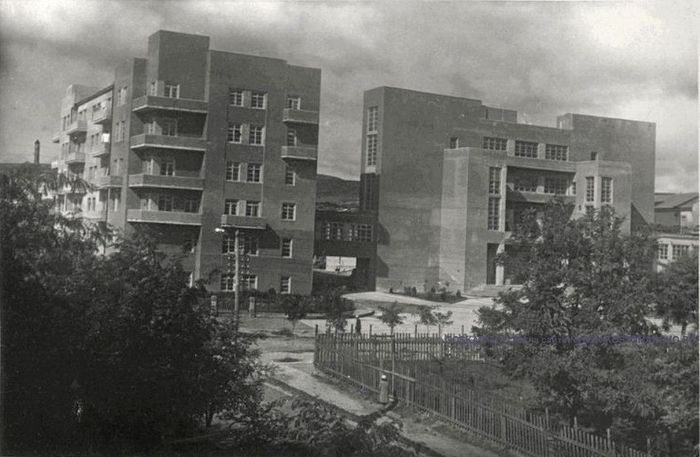
In 1924 (according to some sources, in 1921), a plan for arranging garden cities was developed in Rostov-on-Don. A total of eight settlements around Rostov-on-Don and Nakhichevan-on-Don were designed according to these principles. S.S. Shestakov, A.P. Ivanitsky, and architect V.N. Semyonov (personally acquainted with the garden city concept author Ebenezer Howard and who worked with him on the first garden city of Letchworth, UK) took part in their design. Also no later than 1924, a nursery was established that became the main supplier of seedlings for the garden city of Uralmash in the 1920s‑1930s, and it still exists today under the name “Botanical Garden of the Southern Federal University”.
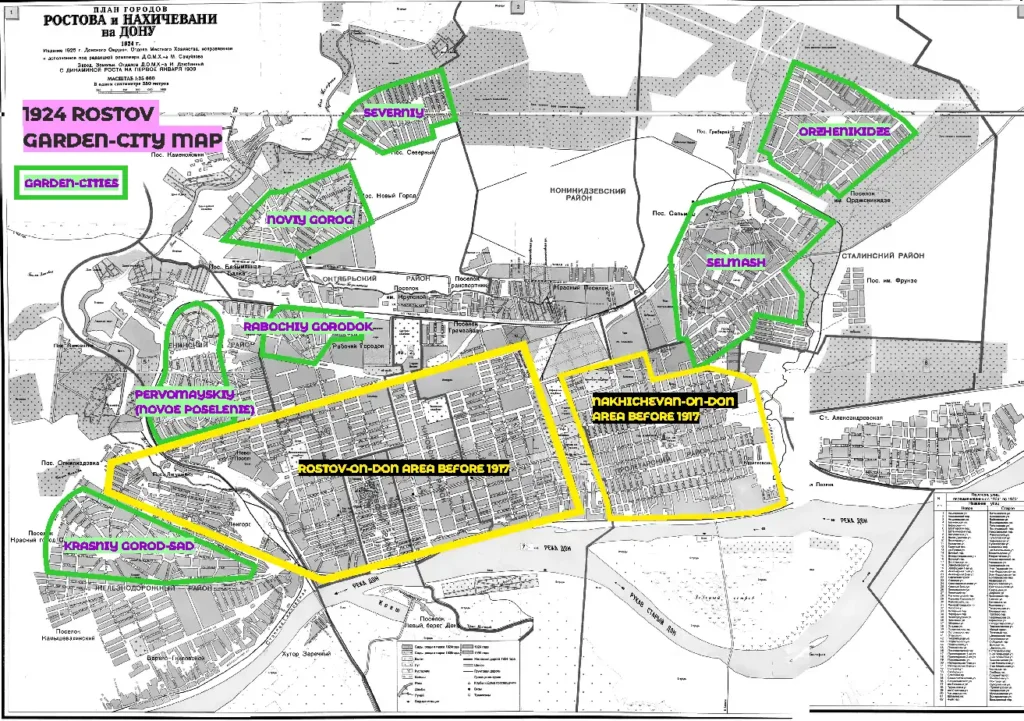
The development of new districts was planned according to Howard’s ideas and his garden city model. This is how the settlements of Ordzhonikidze, Selmash, Severny, Novy Gorod, Novoe Poselenie, Pervomaisky, Krasny garden city, and Kamyshevakhinsky were designed: in the center of each settlement, a school, factory kitchen, bathhouse, laundry, and other household, cultural, and public facilities were built. Streets (often radial‑ray systems) were laid from these centers, but the block structures in the settlements are extremely diverse.
Explosive growth
The area of Rostov-on-Don and Nakhichevan-on-Don within the 1923 boundaries was about 14.5 km², and the total population on the eve of the construction of new garden cities was about 350,000 people, which corresponds to a density of about 24,000 people per km². The total area of all new garden districts was approximately 13.77 km². The city’s area almost doubled after the appearance of the garden cities. It is worth noting that the total population also doubled during these years, from 231,400 in 1923 to 502,928 in 1939.
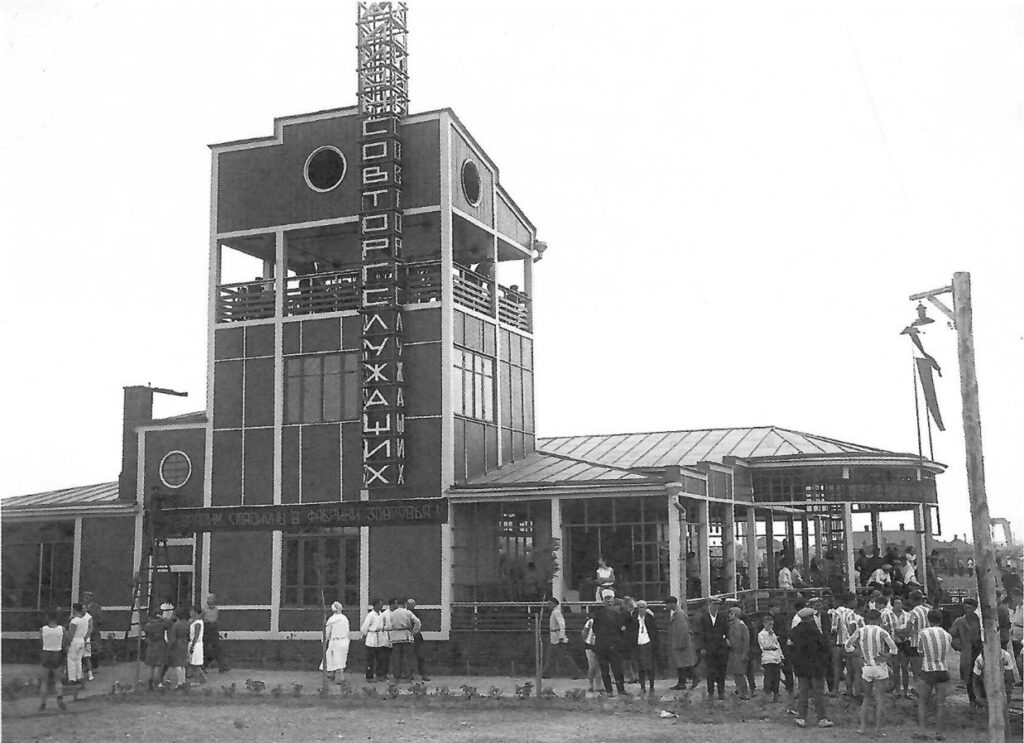
In 1935, the phenomenon of the garden city was reflected for the first time in the naming of urban facilities. In 1930, a stadium for trade employees appeared in Rabochy Gorodok, which later in 1935, after reconstruction by architect L.L. Eberg, began to be referred to in the local media as the “Garden Stadium”.
The mass introduction of fruit trees helped the residents of Rostov survive two occupations during the Great Patriotic War, as evidenced by surviving accounts. In addition, authentic names of tree varieties such as “zherdela” and “tyutina” (wild apricot and various mulberry varieties) became established and became part of the city’s identity.
Modernist experiment
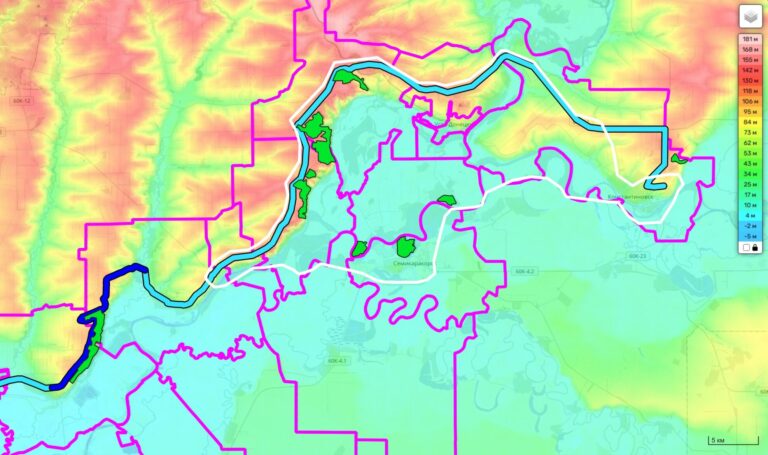
After the war, the southern regions of the USSR began implementing the “Great Plan for the Transformation of Nature,” which involved massive planting of multi‑kilometer forest belts in the steppes. By 1960, when the shelterbelts had matured, this plan put an end to the annual dust storms that hit the city.
City of individual housing
According to a study by Rostov urbanist Alexander Vysokovsky, the combination of local residents’ desire to obtain a private plot of land with a house (by any means) and high population density led to the fact that, despite the absence of private land ownership for almost the entire 20th century, Rostov-on-Don became the only million‑plus city in Russia with a share of individual housing exceeding 80%. This refutes the thesis that high‑rise buildings are necessary to increase population density. Rostov-on-Don turned out to be denser than the Ural million‑plus cities.
Fruit garden
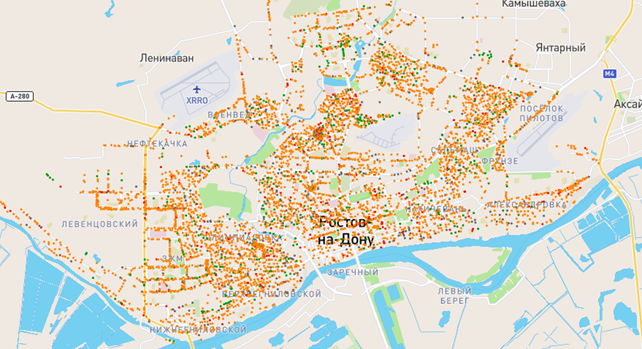
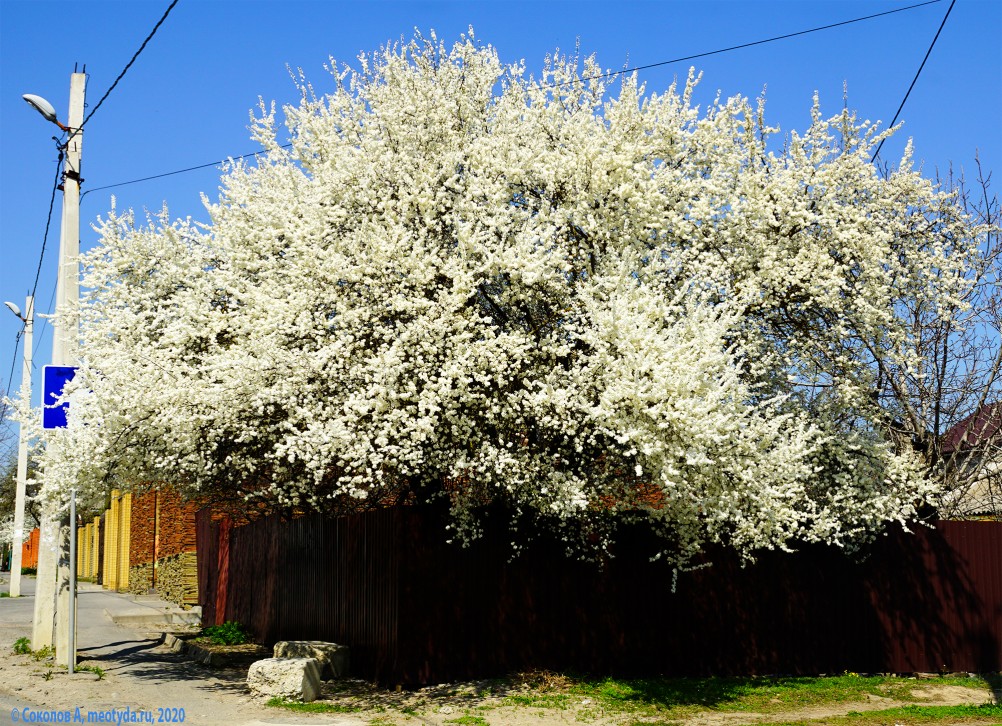
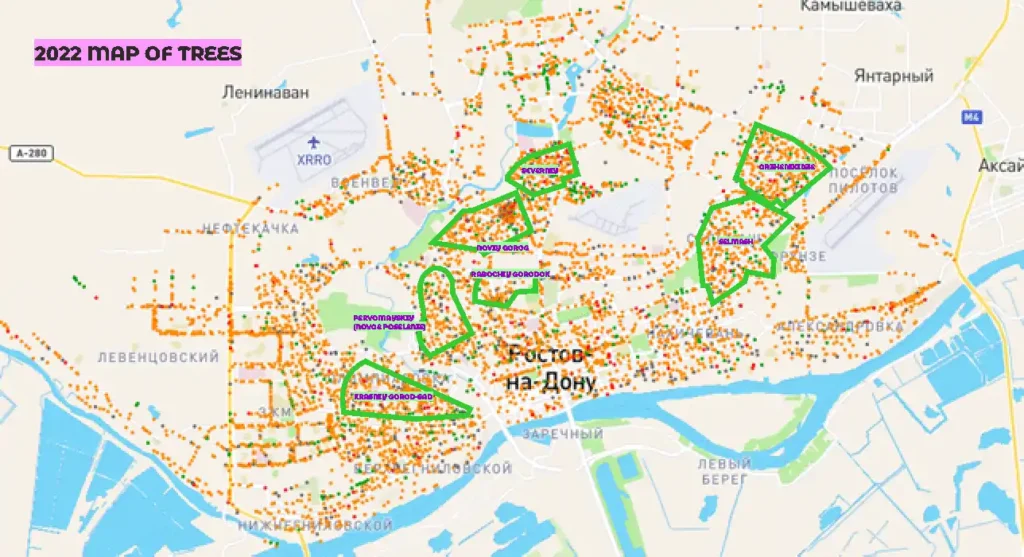
In 2019, a contract was signed to inventory green spaces. The contractor “Dorozhny Consulting” was to assess the physiological condition of trees, their age, species, and sanitary status. During inspections, the Department of Housing and Utilities found that the inventory was being carried out dishonestly and was not completed on time. As a result, the contract with the contractor was terminated, and the city still lacks a tool to monitor the quality of its tree stock. However, for a short time the contractor created a website with a detailed map, which made it possible to determine that the most massive locations of tree plantings a century later remain the same garden cities. And that more than half of all trees in Rostov are fruit trees, planted by local residents on their household plots. On municipal territory, however, the administration does not plant fruit trees, citing sanitary norms and rules (it plants mostly maples). For citizens, however, fruit trees are an important part of the city’s identity. They not only reflect the concept of a garden city but also carry the memory of the Great Patriotic War and the occupation period.
Return of dust storms
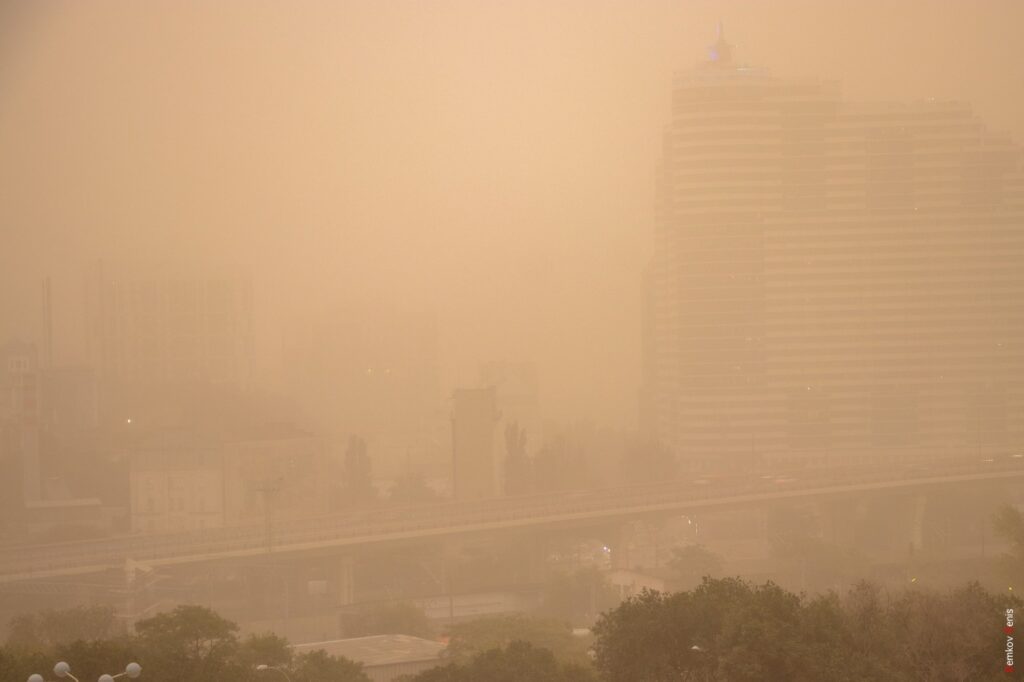
Over the past five years, mass cutting of urban orchards for the construction of residential complexes has intensified. Compensatory planting of seedlings is carried out, but since no supervision mechanisms for their condition are defined, almost all trees planted as compensation do not survive and die without care. Moreover, such plantings are carried out far beyond the development line, making them useless for retaining urban dust.
An important factor is climate warming – dry summer periods create difficulties for the development of fruit trees: zherdela and apricots. They accumulate diseases and tolerate post‑summer temperature drops worse.
The shelterbelts that protected the city from dust storms have now degraded (since the 1980s, all organizations responsible for their condition began to close, and the last ones were closed in 2006). As a result, in 2020 a major dust storm hit the city. A similar‑strength dust storm recurred on September 30, 2024. Judging by this event, we can now expect regular dust storms again, as 70 years ago.