Resource potential of image «garden city» in Rostov-on-Don modern city branding
ABSTRACT
Modern urban branding is becoming a determining factor in shaping the identity of cities. This article is aimed at analyzing the resource potential of the image of «Garden City» in the context of urban branding of Rostov-on-Don. The concept of «garden city» with its age-old roots, striving for harmony of nature and urbanism, serves as a basis for studying the impact on sustainability, quality of life and economic development of the city.
The research is based on real scientific and historical sources and case studies covering the historical roots of «Garden cities» in Rostov-on-Don and their modern state. The article analyses empirical data, including currently inaccessible to the reader, namely a map of tree survey in Rostov-on-Don, statistics in comparison with the proposals of Ebenezer Howard, and calculation of the total built-up area of Garden cities in the territory of Rostov-on-Don, for a deep understanding of the role of the image in urban branding.
The study reveals the influence of the «garden city» concept on the city’s sustainability, improving the quality of life and stimulating economic development. Real data confirm the relevance of the image in the context of urban planning and branding. Rostov-on-Don is an example of successful integration of the image into public perception.
The discussion includes in-depth analysis of the results and conclusions for urban branding. The necessity of strategic integration of the image «Garden City» into the city’s development, supporting its uniqueness and attractiveness for residents and visitors, is emphasized. Recommendations for effective strategies based on the successful use of the «Garden City» image in the modern urban space are provided.
KEYWORDS: Urban branding, Garden cities, Rostov-on-Don, Sustainable development, Quality of life, Sustainable cities, City identity, City history
Alekseev, D. S. (2023). Resource potential of the image of «Garden city» in modern urban branding of Rostov-on-Don. Culture Management, (8). https://cyberleninka.ru/article/n/resursnyy-potentsial-obraza-goroda-sada-v-sovremennom-gorodskom-brendinge-rostova-na-donu
Relevance of the study (introduction)
Cities are not just places to live; they are entities with a unique identity, cultural significance and economic skill. The concept of urban branding, or the strategic development of a city’s image, has gained great importance in recent years. Among the many images that cities can adopt, the «Garden City» stands out as a powerful and timeless archetype. Based on the ideas of 19th-century urban planning pioneers such as Ebenezer Howard, the «Garden City» represents a vision of cities that organically integrate nature, architecture and a sustainable lifestyle. In this article, we explore the resource potential of the «Garden City» image in the modern urban branding of Rostov-on-Don, drawing on scientific data and real-world examples.
Sustainable development is one of the main tasks of modern urban planning. The concept of garden cities emphasizes the balanced relationship between urban development and the natural environment. Scientific studies, such as Richard T.T. Forman’s work «Urban Ecology: Science of Cities» [1], have highlighted the importance of green spaces in mitigating environmental challenges. Creating green infrastructure such as parks, green roofs and urban forests not only improves air quality and provides recreational opportunities, but also contributes to climate change mitigation and adaptation.
The city of Singapore, often called the «City in a Garden», illustrates the potential of a garden city image. Through initiatives like Gardens by the Bay and a commitment to green infrastructure, Singapore has become a global leader in sustainable urban development.
Research shows that the presence of green spaces in the urban environment has a profound positive impact on the quality of life of residents. The presence of parks and gardens, as evidenced by the work of Stephen and Rachel Kaplan «The Experience of Nature: A Psychological Perspective» [2], helps reduce stress, improve mental health and strengthen a sense of community. These factors are crucial for city branding, as they directly influence the perception and desirability of a city.
European cities such as Copenhagen, with its emphasis on sustainable urban development and thriving urban agriculture, demonstrate how the garden city image can be a resource for improving the well-being of its citizens.
The image of the «Garden City» also carries economic potential. The integration of green spaces and sustainable practices can attract business and tourism. For example, the Australian brand «Garden City» in Melbourne has significantly increased the tourism sector, making it a hub for both business travelers and tourists.
Garden cities also appeared en masse in the USSR during the first five-year plan years. It was in Rostov-on-Don that in 1921, design began for 8 new districts based on the principles of garden cities, which became one of the largest implementations of this urban planning concept in the USSR, surviving to this day.
Theoretical and information base (materials and methods)
Methods. The study of the history of garden cities in Rostov-on-Don from 1921 to the present includes the use of various methods and extraction of information from historical maps, modern research, books on architectural history and articles. Each source provides a unique perspective and contributes to a comprehensive understanding of the evolution of the city over time. Methods include the study and analysis of various materials from different sources through cartographic analysis, photo analysis, quantitative analysis, comparative analysis, documentary analysis, and analysis of architectural styles.
Materials. Maps as historical documents: Analysis of historical maps from different time periods can reveal changes in the perception of the layout and future development of garden cities.
Books on architectural history: books devoted to urban planning and architecture of the first five-year plan period can provide insight into the original architecture of garden cities. They can clarify the vision behind their creation, provide insight into the key architects involved in the design of garden cities, and reveal the planning principles that guided the design.
Academic journals: Scientific articles on urban studies, architecture and geography have been studied. These sources often contain in-depth analysis, case studies and research findings related to urban development, providing a scientific perspective on the history of garden cities and a modern reading of the concept and its modern uses.
Newspaper archives and social networks: Historical newspapers can offer a glimpse into public opinion, local events and changes in urban life during the design and construction of garden cities in Rostov-on-Don. They can also document controversies, urban planning debates and social shifts affecting garden cities. Materials found on social networks reveal the current state of the influence of garden cities on public consciousness.
Study commissioned by the municipal administration: in 2020, a study was carried out by order of the municipal administration of all city trees, shrubs and lawns; the study revealed quantitative and qualitative indicators of all urban green spaces, but for a reason unknown to the author, in 2022 the site with the research results became unavailable, however, the author has saved screenshots of the map of the research results, and the documents of the research results remain available on the website https://archive.org/, about which the author has made appropriate footnotes in the list of references.
Census data: census records can provide demographic information, demographic trends and socio-economic changes in Rostov-on-Don during the development period of garden cities.
Historical photographs: Visual materials, such as photographs, can visually document the transformation of the city. Various historical photographs of the urban landscape, architectural changes and public life have been found.
By combining information from these diverse sources, a detailed and nuanced narrative of the history of garden cities from 1921 to the present has been constructed, capturing the interplay of urban planning, social change and the urban landscape.
Results
Ebenezer Howard’s book «Garden Cities of To-morrow» had a huge influence on urban planning thought throughout the world. Published in Russian in 1905, it also influenced Russian architects’ ideas about the «right» city. Its influence began to be felt in the projects of pre-revolutionary settlements. However, the truly massive implementation of the ideas of this book in the USSR occurred after the Civil War. The general course towards the implementation of revolutionary ideas was taken up by architecture, which made revolutionary constructivism the main implemented style for new buildings, and in urban planning, the idea of the «Garden City» was considered truly revolutionary. Thus, it was in Russia that «garden cities» began to be formed with constructivist buildings, which the author of the garden city idea could not imagine. Mark Meerovich describes the evolution of the ideas of Ebenezer Howard, elected in 1927 as an honorary member of the Leningrad Society of Architects, in the USSR in his book «Urban Planning Policy in the USSR (1917-1929). From a Garden City to a Departmental Workers’ Settlement» (NLO, 2018). I will, however, turn to a very large phenomenon not reflected in Meerovich’s book, namely the implementation and further evolution of the ideas of the «Garden City» in Rostov-on-Don.
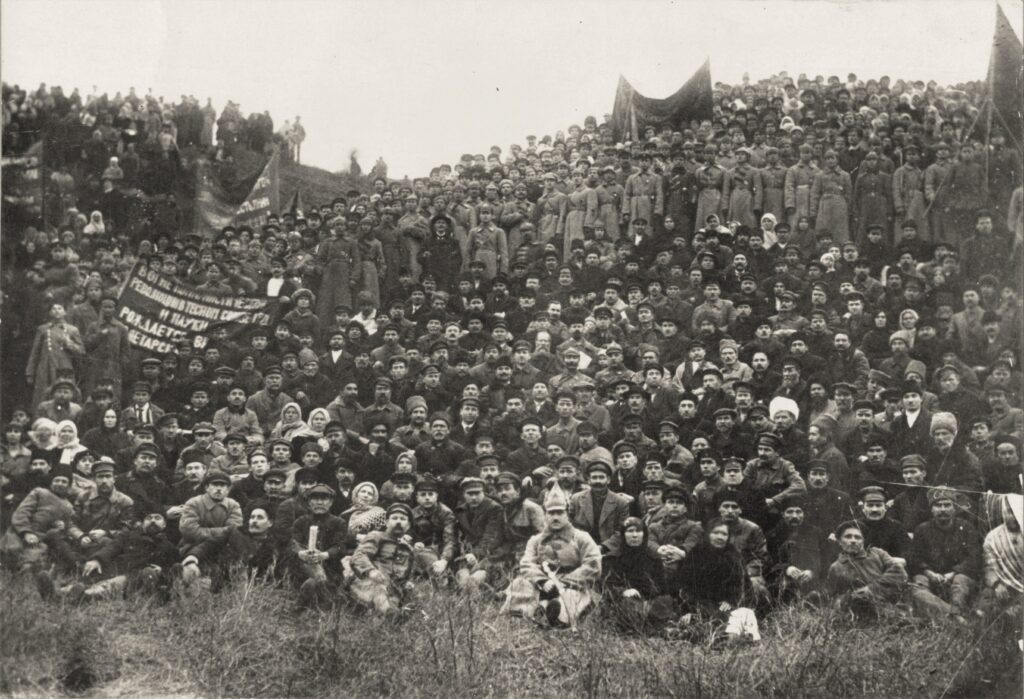
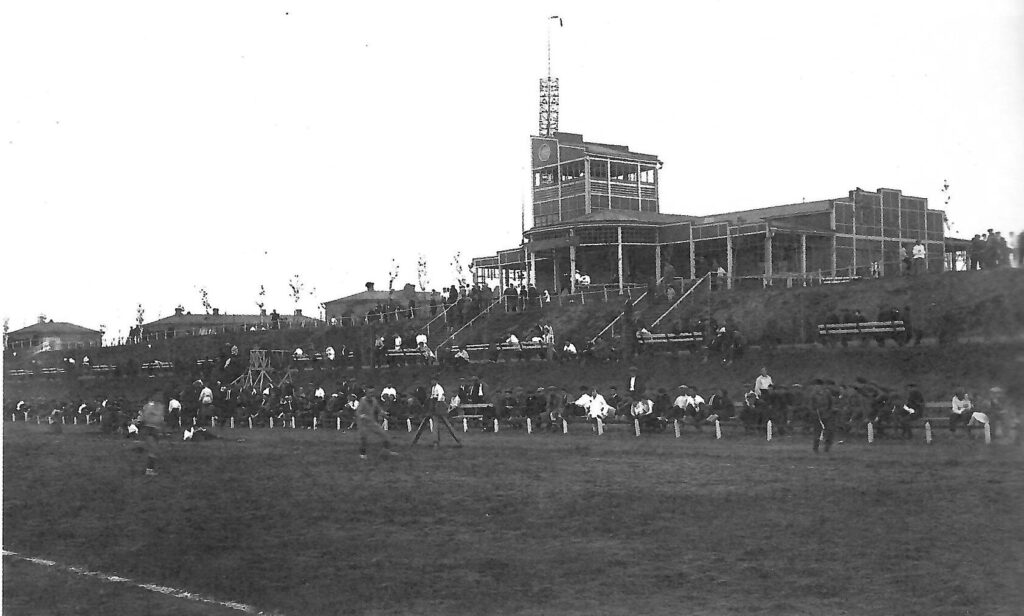
Thanks to the events of 1902, the famous strike of workers in Rostov, which became the first major strike of workers in the Russian Empire, the Bolsheviks established a reputation for Rostov as a city with an advanced labor movement [3]. In 1920, the Civil War ended in Rostov, and in 1922, a large-scale celebration of the 20th anniversary of the events of 1902 took place (Fig. 1).
Already at the beginning of 1924, a decision was made to commemorate the strike and build the first Palace of Workers in the USSR. Its construction was planned to be completed by 1927, the celebration of the first anniversary of the October Revolution. In 1924, an all-Union architectural competition was announced for the design of the first Palace of Workers in the USSR [4].
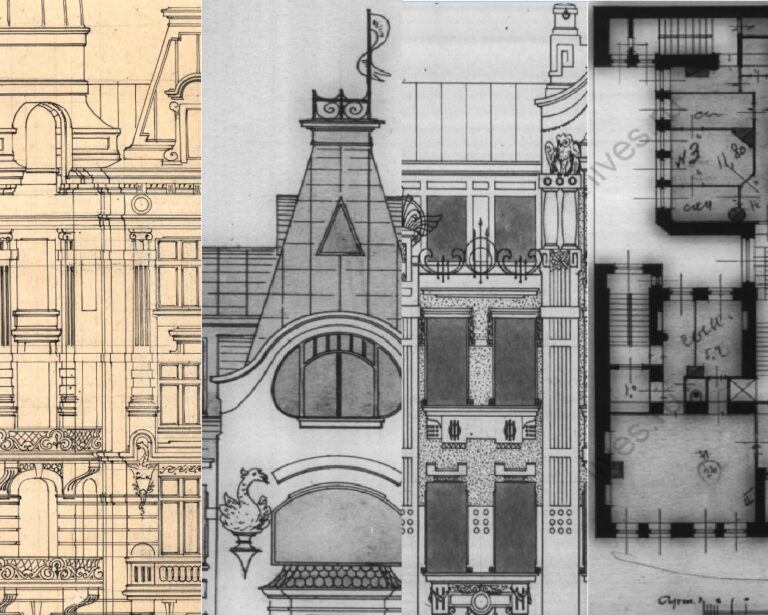
Also in 1924, and according to some sources, the design was started back in 1921 (Fig. 2), an urban planning project for new districts of Rostov-on-Don and Nakhichevan was developed, to which high-level specialists S.S. Shestakov, V.N. Semenov, A.P. Ivanitsky were involved [5, p. 12].
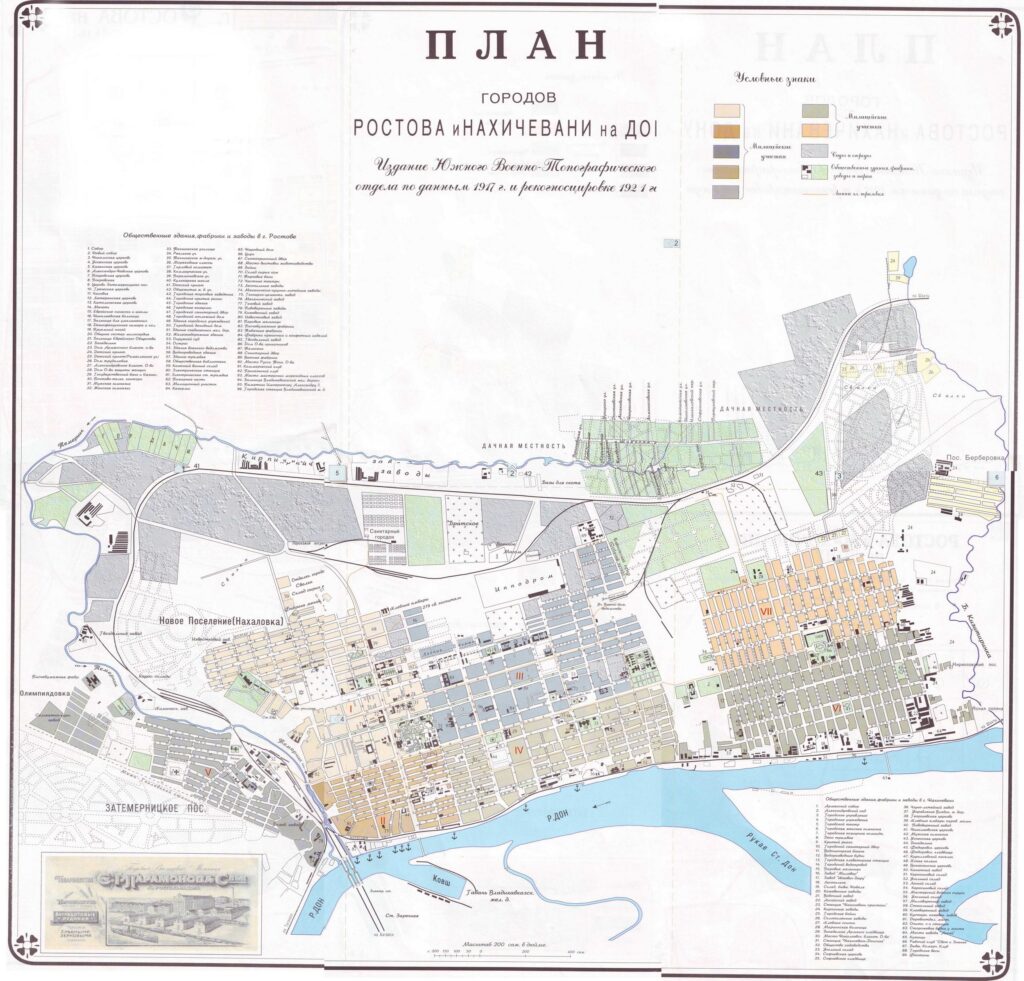
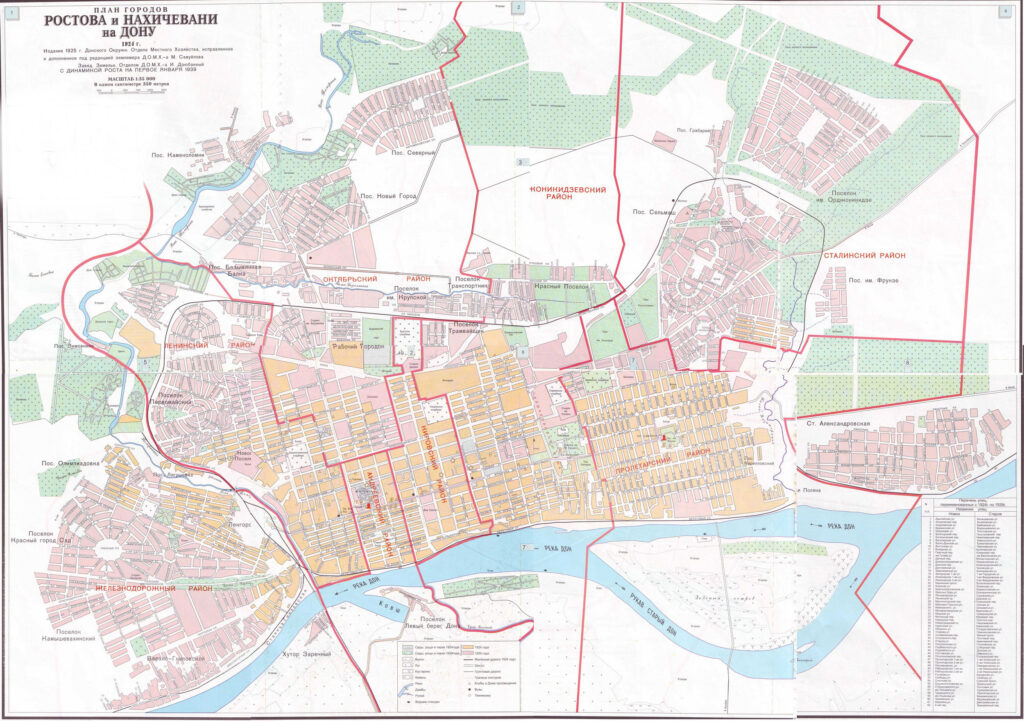
They plan to develop new districts according to the ideas of Ebenezer Howard and his «Garden City» [5, p. 13]. The villages named after Ordzhinikidze, Selmash, Severny, Novy Gorod, Novoe Poselenie, Pervomaisky, Krasny Gorod Sad, Kamyshevakhinsky, are designed according to some principles of the garden city, namely, in the center of the village a school, a factory kitchen, a bathhouse, a laundry and other household and cultural public buildings are built, streets are laid from these centers, often of a radial-beam system, but the block structures of the villages are extremely diverse, even a triangular system is used (Fig. 3).
The area of Rostov-on-Don and Nakhichevan-on-Don within the boundaries of 1923 was about 3500 acres (14.5 km²), which corresponded to the area of the suburb, according to Howard’s thought, however, the total population before the construction of new «garden cities» was about 350 thousand people, which corresponds to a density of about 24 thousand people per km², which was almost 20 times denser than the central city described by Howard, with a population of 58,000 people, an area of 12,000 acres (48.562277 km²), corresponding to a density of 1200 people/km².
The area of each of the new districts planned in 1924 individually ranges from 200 acres (0.8 km²) to 450 acres (1.82 km²). In total, the territory of all new districts was about 3400 acres or 13.77 km². Thus, the area of the city after the appearance of garden cities almost doubled. It is also worth mentioning that the total population in these years (from 1923 to 1939) also doubled from 231,400 in 1923 [6] to 502,928 in 1939 [7].
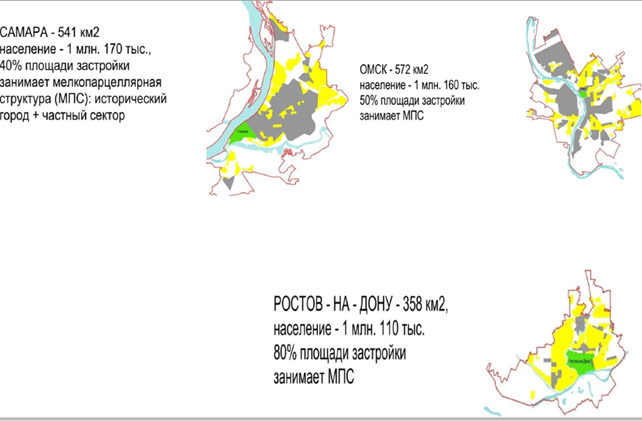
The consequences of the experiment to create garden cities in Rostov-on-Don in the long term are curious: Rostov has become the most paradoxical million-plus city in Russia. The share of individual housing construction in the city area is 80%, while the population density is higher in comparison with the Ural million-plus cities (source: presentation by V.V. Vysokovsky, V.E. Stadnikov, HSE) (Fig. 5), and this is not explained by the larger areas of enterprises located within the city; in Rostov their number is no less, besides, within the city there are 3 airports (old, military, and helicopter plant), and two huge enterprises (Rostselmash and Rostvertol), in addition, several large port and industrial zones, vast areas of groves, and a botanical garden. At the same time, the area of the city is lower than that of other million-plus cities in Russia.
All these data indicate that the experiment started almost 100 years ago led the city of Rostov to unique consequences and created a highly sustainable environment in the city. As evidenced by the survey of trees in the city of Rostov-on-Don, carried out by order of the city administration in 2020, «Analysis of the survey materials made it possible to identify the most common tree species in Rostov: in general, these are fruit trees — common apricot, cultivated cherry, walnut, cultivated plum, etc. Together, they account for almost half of all trees on the city streets.» [11]
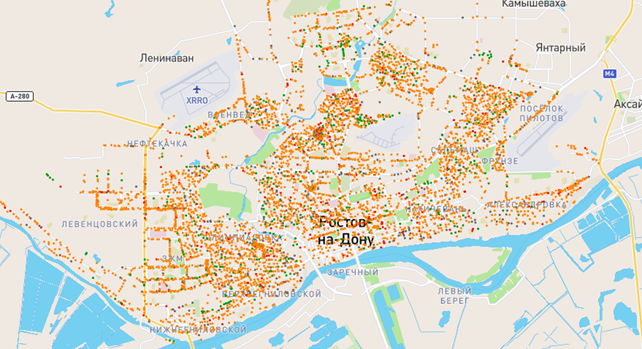
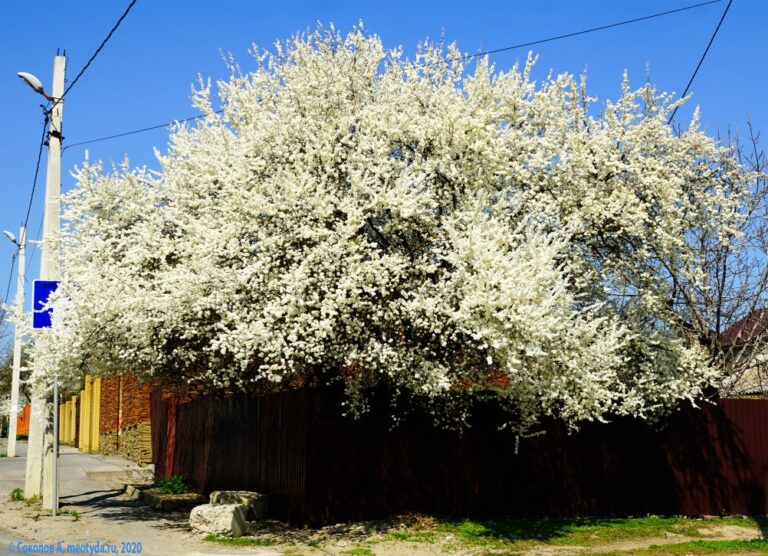
On the provided map of public trees in the city (Fig. 6), it can be seen that the main concentrations of such trees, more than half of which are fruit trees, coincide with the «garden cities» laid down in the 1920s, with these areas «spreading» to adjacent territories. For a century, local residents have been replanting fruit trees and monitoring their safety. However, at the moment, planting fruit trees is prohibited by legislation.
In the 1990s, the launched process of privatization of the development of historical garden cities effectively removed them from the status of «departmental settlements», the living space of which was a factor in managing workers at USSR enterprises, as described by Mark Meerovich in his work «Urban Planning Policy in the USSR (1917–1929) From a Garden City to a Departmental Workers’ Settlement», which was a key difference between the project of «garden cities» in Soviet Russia and other countries, and led them to private property, as intended by Ebenezer Howard in his book. This factor stopped the demolition of such villages and became a factor of legal stabilization and stopped the compaction of garden city districts.
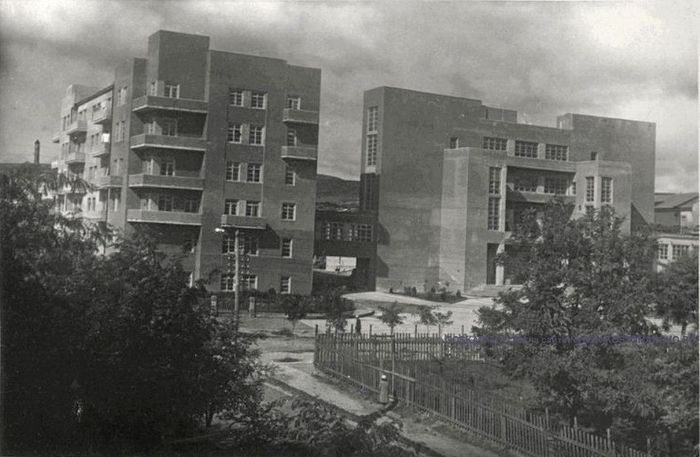
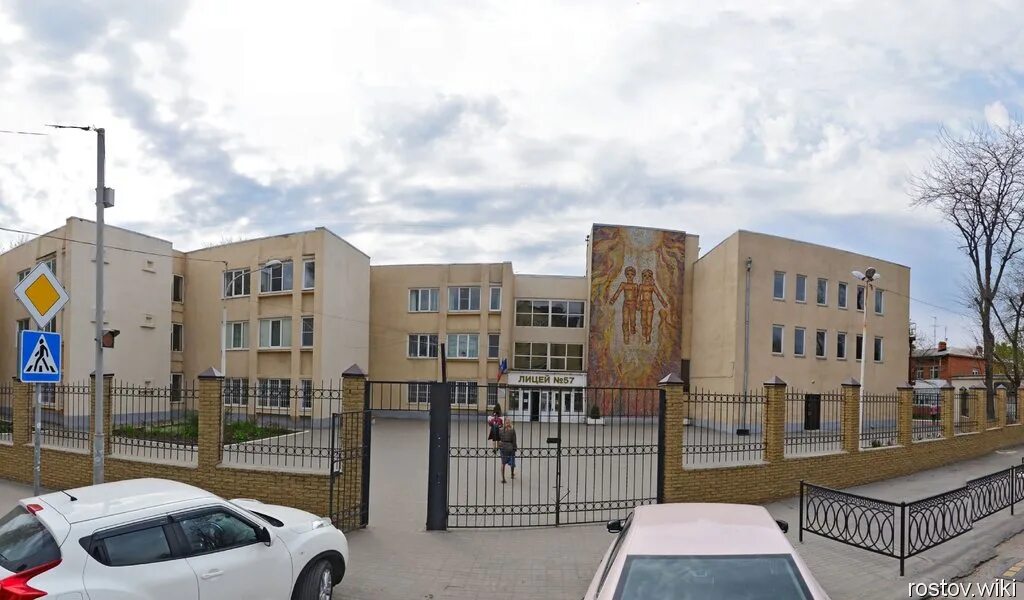
The only Garden City that has remained unchanged in terms of urban density since its design is the «Novoe Poselenie» district; it is noteworthy that in its core center there is school No. 57, the extension of which was designed by A.A. Vysokovsky in the 1980s (Fig. 7).
Considering all the factors, the project to create garden cities around Rostov-on-Don should indeed be considered successful, time-tested and radically changing the urban environment of Rostov and its agglomeration.
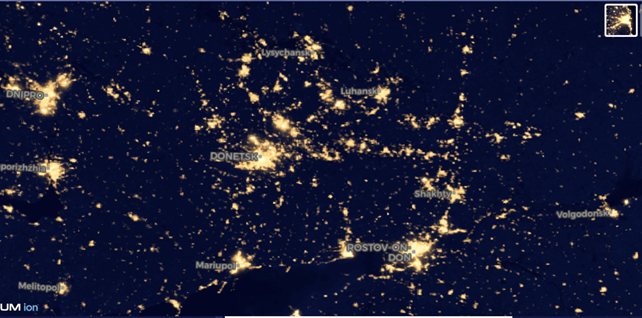
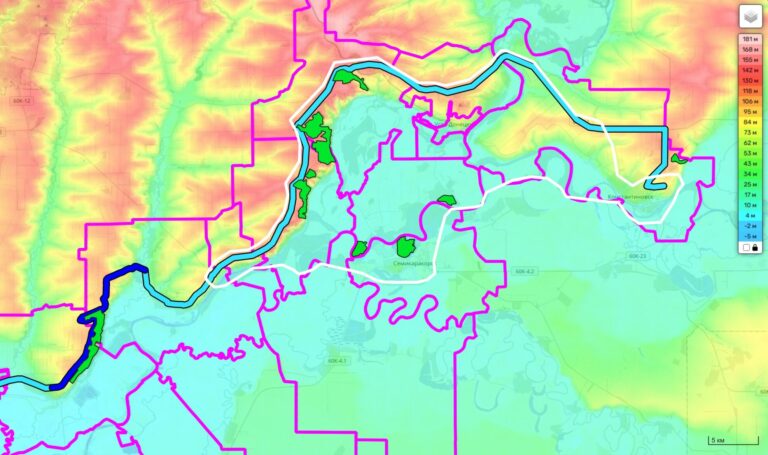
Furthermore, as can be observed from the settlement system of the Rostov agglomeration and the «Donbass» macroregion (Fig. 8), this settlement zone was connected by a railway and represents a semblance of the settlement system proposed by Howard: it is a ring-shaped conurbation system with centers in Rostov, Donetsk, Lugansk, sub-centers in Taganrog, Shakhty, Novocherkassk, Azov, Debaltsevo, Makeevka, with a radius of 88 km, home to about 5 million people.
Conclusions (discussion)
The image of the «Garden City» is more than just a nostalgic ideal of the past; it represents an inventive vision of the future. Scientific research has shown that integrating green space, sustainability and quality of life into urban planning can lead to environmentally friendly, prosperous and attractive cities. Examples of cities such as Singapore, Copenhagen and Melbourne demonstrate the potential of this image in modern urban branding. As cities evolve, the «Garden City» concept offers a sustainable, aesthetically pleasing and economically viable way forward.
In conclusion, the image of the «Garden City» should be considered a valuable resource in the branding and development of the city of Rostov-on-Don. By following its principles, cities can create environments that not only attract residents and tourists, but also contribute to a sustainable and prosperous future. However, changes in the regulatory framework are necessary to allow the planting of fruit trees by local governments.
Currently, the most widespread fruit tree varieties in the territory of Rostov garden cities and their authentic names such as «Tyutina» [12] and «Zherdela» [13] have received an unexpected embodiment in the branding of a local popular media and production company.
ACKNOWLEDGMENTS
I express my gratitude to my teacher Vladimir Gennadievich Nikolaev for his unforgettable course «History of Urbanism» at the Higher School of Economics, within which the first draft of this work was written. Also to my wife, Alena Alekseeva, who inspires me to study our native Rostov-on-Don and our common small homeland: the garden city «Novoe Poselenie». And to my father Sergey Yuryevich Alekseev and my mother Natalya Nikolaevna Alekseeva for their extraordinary intellectual and material support. Special thanks to Artur Georgievich Tokarev for his colossal contribution to the study of the architecture of Rostov-on-Don and the entire south of Russia during the architectural avant-garde period.
REFERENCES
- Forman R. T. T. Urban ecology: science of cities. — Cambridge University Press, 2014. ↩
- Kaplan R., Kaplan S. The experience of nature: A psychological perspective. — Cambridge university press, 1989. ↩
- Pushkareva I. M. ROSTOV STRIKE IN NOVEMBER 1902: HISTORICAL FACT AND HISTORIOGRAPHICAL FACT // Via in tempore. History. Political science. 2008. No. 1 (41). URL: https://cyberleninka.ru/article/n/rostovskaya-stachka-v-noyabre-1902-g-fakt-istoricheskiy-i-fakt-istoriograficheskiy (accessed: 11.11.2021). ↩
- Tokarev, A. G. PALACE OF LABOR IN ROSTOV-ON-DON. HISTORY OF CONSTRUCTION, FEATURES OF ARCHITECTURAL AND URBAN PLANNING SOLUTION [Electronic resource] /A. G. Tokarev // Architecton: Proceedings of Higher Education. — 2019. — No. 1(65). — URL: http://archvuz.ru/2019_1/7 ↩
- Tokarev A.G. Architecture of Rostov-on-Don of the first five-year plans, Rostov-on-Don, 2013. ↩
- People’s encyclopedia «My City». Rostov-on-Don [Electronic resource] — URL: http://www.mojgorod.ru/rostovsk_obl/rostovnadon/index.html ↩
- All-Union Population Census of 1939. Urban population of the USSR by urban settlements and intra-city districts [Electronic resource] — URL: http://demoscope.ru/weekly/ssp/rus_pop_39_3.php ↩
- Tokarev A.G. Architecture of the South of Russia of the avant-garde era part 2 of the first five-year plans, Rostov-on-Don, 2018. ↩
- Do the exercise [Text] // Hammer. — 1930. — 24 May. ↩
- Model stadium-garden [Text] // Hammer. — 1935. — 14 Apr. ↩
- Electronic map of trees of Rostov-on-Don [Electronic resource]. 2022. Update date: 15.10.2023. URL: https://web.archive.org/web/20220310135047/http://rostov-trees.ru/about.html ↩
- City online magazine «Tyutina» [Electronic resource] — URL: https://t.me/tutina ↩
- Production company Jerdëla group (see in the network «Instagram» banned in the Russian Federation by hashtag #jerdelagroup). ↩
AUTHORS’ INFORMATION
Alekseev Daniil S. — Bachelor, Master’s student in Urban Design; Academy of Architecture and Arts, Southern Federal University (344012, Russia, Rostov-on-Don, 45 Mechnikova St., apt. 31); danya@ya.ru.
Author’s ID in RISC: 1068646
ORCID: 0009-0003-4395-0356
ResearcherID (Web of Science): JPY-2982-2023